
Science · Manufacturing & CMC
Building the Analytical Foundation for Iboga-Derived Materials
Why characterization, reproducibility, and scientific standards are foundational to responsible iboga research.

Interest in iboga and iboga-derived compounds is growing across research, medicine, and biotechnology. As that interest expands, one issue will become increasingly important: the quality and characterization of the materials being studied.
Iboga is a complex botanical material. Unlike a single synthetic molecule produced to a fixed specification, naturally derived materials can vary significantly in composition.
For the field to advance responsibly, greater attention will need to be paid to analytical characterization, reproducibility, and scientific standards.
Iboga Is More Than a Single Molecule
Much of the modern scientific conversation around iboga focuses on ibogaine.
But Tabernanthe iboga contains a broader family of naturally occurring alkaloids. The concentration and relative composition of these compounds can vary from one botanical sample to another.
Factors such as genetics, growing conditions, plant maturity, harvesting, storage, and processing may all influence the chemical profile of the starting material.
This creates an important distinction.
Two samples described simply as "iboga root bark" may not necessarily be chemically equivalent.
Similarly, two extracts described using the same general terminology may contain meaningfully different concentrations or ratios of compounds.
For rigorous scientific work, those differences matter.
Characterization Comes Before Standardization
Before a material can be standardized, it must first be understood.
Analytical chemistry allows researchers to identify and measure compounds within complex botanical materials. Over time, this can help establish a clearer understanding of natural variability and define the characteristics that matter most for research and development.
This process can include questions such as:
- Which alkaloids are present?
- In what concentrations?
- How much variation exists between samples?
- How does processing alter the chemical profile?
- Which impurities or contaminants may be present?
- How stable is a material over time?
These may appear to be basic questions, but they are foundational to reproducible science.
Without reliable characterization, researchers risk comparing materials that are assumed to be equivalent but may actually be chemically different.
Why Reproducibility Matters
Reproducibility is one of the fundamental principles of scientific research.
If two research teams study what is described as the same botanical material but receive samples with substantially different chemical profiles, interpreting the resulting data becomes more difficult.
Was a difference in outcome caused by the experimental conditions?
Or was it caused by variation in the material itself?
Better analytical characterization helps reduce this uncertainty.
As research involving iboga-derived materials grows, a more consistent understanding of the materials used in studies could make findings easier to compare across laboratories, institutions, and research programs.
This becomes particularly important as the field progresses from exploratory research toward more structured development.
Looking Beyond Ibogaine
Scientific interest in ibogaine has created an important starting point, but the broader chemistry of iboga remains an area worthy of deeper investigation.
Botanical materials are complex systems.
Understanding their complete chemical composition may reveal important relationships between major and minor constituents and may help researchers better understand how different preparation or processing methods affect the resulting material.
This does not mean that every compound will ultimately prove biologically significant.
It means that strong science begins by understanding what is present before drawing conclusions about what matters.
Analytical characterization provides the foundation for asking those questions systematically.
From Botanical Description to Scientific Definition
One of the long-term challenges for any botanical field is moving from broad descriptive categories toward scientifically defined materials.
Terms such as "root bark," "extract," or "total alkaloid" can describe a general class of material while still leaving considerable chemical variability within that category.
Scientific development requires greater precision.
Over time, the field may need clearer definitions around identity, composition, purity, stability, and acceptable levels of contaminants.
That evolution has occurred across many areas involving botanical and naturally derived materials.
Iboga is likely to be no different.
Analytical Science as Infrastructure
Analytical science is sometimes viewed as a supporting function within product development.
In reality, it is part of the infrastructure on which credible research depends.
It provides the tools necessary to understand what a material is, evaluate whether it is consistent, investigate how it changes, and establish whether results can be reproduced.
Without that foundation, even sophisticated research programs can be limited by uncertainty surrounding the materials themselves.
As the global conversation around iboga continues to evolve, developing stronger analytical standards will be an important part of building a credible scientific field around it.
A More Rigorous Future for Iboga Research
Iboga sits at the intersection of traditional knowledge, natural-product chemistry, emerging scientific research, and growing international interest.
That creates both opportunity and responsibility.
Progress should not be measured only by the number of studies conducted or compounds developed. It should also be measured by the quality of the scientific foundations supporting that work.
Better characterization.
Greater reproducibility.
Clearer definitions.
More reliable data.
These are not the most visible parts of scientific development, but they are often among the most important.
At Reset Health, we believe rigorous analytical science will be essential to the responsible evolution of the iboga field.
The more precisely we understand the materials being studied, the stronger the foundation becomes for the science that follows.
This article reflects Reset Health's perspective on scientific and development considerations. It is provided for informational purposes only, does not constitute medical advice, and does not describe approved products, completed studies, or regulatory determinations. Development programs described are investigational and subject to scientific, legal, regulatory, and commercial uncertainty.
About Reset Health
Reset Health is a Gabon-rooted biotechnology company advancing plant-derived medicines through responsible sourcing, scientific characterization, and pharmaceutical development.
Related Insights

Local Scientific Capacity as Infrastructure, Not Charity
Local scientific capacity is not a charitable addition. It is infrastructure that enables countries of origin to generate knowledge, build agency, and participate meaningfully in development.
May 2, 2026 · 8 min read
Read Article
Traceability Standards for Botanical Raw Materials
Credible botanical science requires more than analytical testing. Every material needs a verifiable history connecting its source, identity, handling, transformation, and quality data.
April 9, 2026 · 7 min read
Read Article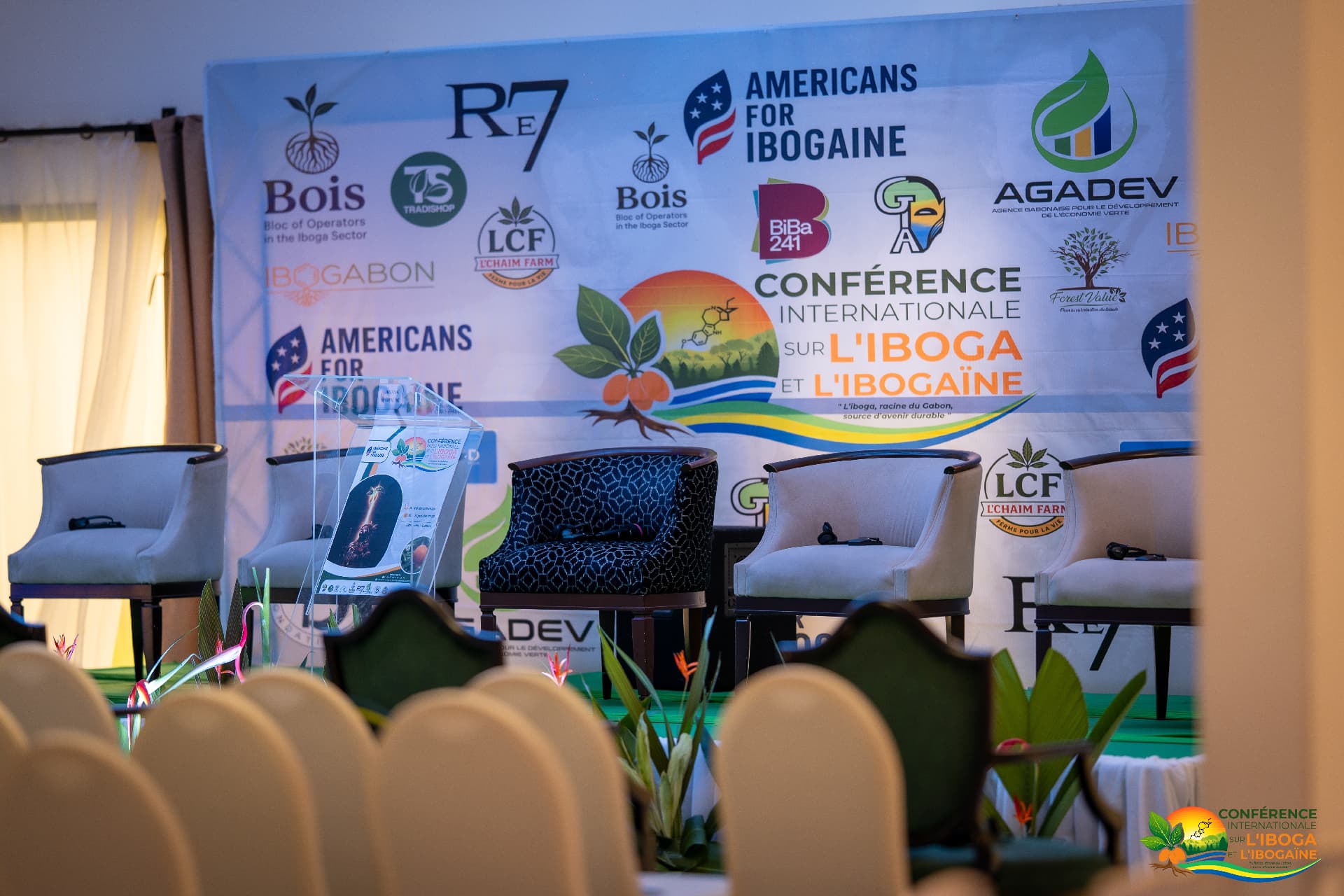
The Libreville Conference on Iboga & Ibogaine: Building the Future From the Source
In January 2026, stakeholders from Gabon and abroad gathered in Libreville around a central question: as international interest in iboga and ibogaine accelerates, how should this emerging field develop—and who should participate in shaping it?
January 20, 2026 · 7 min read
Read Article