
Gabon · Policy & Ecosystem
Local Scientific Capacity as Infrastructure, Not Charity
Why laboratories, talent, institutions, and research networks are foundations for responsible natural-product development.
Scientific development in resource-rich countries is too often framed through the language of aid.
Training is described as capacity building. Equipment is described as a donation. Local participation is described as inclusion.
That framing can miss a more important point.
Scientific capacity is infrastructure.
Laboratories, trained scientists, analytical methods, data systems, technical institutions, and research networks are not charitable additions to a serious scientific ecosystem. They are part of the foundation required for that ecosystem to function.
This distinction matters particularly in fields involving botanical materials, natural products, and traditional knowledge, where the countries supplying the biological resources are often separated from the places where much of the scientific analysis, intellectual property creation, product development, and commercial value generation ultimately occurs.
A stronger model begins by recognizing that local scientific capability is not peripheral to development.
It is part of development itself.
Where Science Happens Matters
When a botanical material moves through an international research and development system, value is created at multiple stages.
The material may be collected or cultivated in one country, analyzed in another, processed elsewhere, studied at a university thousands of miles away, and eventually incorporated into a commercial product in another market.
Each stage adds knowledge.
And knowledge creates value.
This raises an important question: where should scientific capability exist within that chain?
If the country of origin participates only at the earliest stage, as a supplier of raw material, it may capture only a small portion of the scientific, economic, and institutional value created from its own biological resources.
Developing local scientific capacity changes that equation.
It allows countries to participate not only in supplying materials, but also in understanding them.
Moving Beyond the Raw-Material Economy
Many resource-rich countries are familiar with a longstanding economic pattern.
Raw materials leave the country.
Higher-value processing, research, manufacturing, and commercialization take place elsewhere.
Finished products may eventually return at dramatically higher value.
This pattern is not unique to pharmaceuticals or botanical products. It can be seen across agriculture, minerals, energy, and manufacturing.
Science can follow the same structure.
A biological resource can be collected locally while its chemical characterization, research datasets, intellectual property, and downstream applications are developed abroad.
Creating stronger local scientific institutions provides an opportunity to move beyond that model.
The goal is not that every stage of research or development must occur within one country.
Modern science is inherently collaborative and international.
The more important principle is that countries of origin should have the ability to participate meaningfully in the generation of knowledge surrounding their own resources.
A Laboratory Is More Than Equipment
Scientific capacity is sometimes discussed as though it begins and ends with purchasing instruments.
It does not.
A functioning scientific ecosystem requires people, processes, institutions, quality systems, maintenance, documentation, training, and a culture of reproducibility.
An advanced instrument without trained scientists is limited.
A trained scientist without reliable laboratory infrastructure is constrained.
A laboratory without consistent methods or quality systems may generate data that cannot be confidently compared or reproduced.
True scientific infrastructure therefore includes several interconnected layers.
It includes technical education.
It includes analytical capability.
It includes data management.
It includes quality standards.
It includes research institutions.
And perhaps most importantly, it includes opportunities for scientists to build long-term careers within their own countries.
Talent Should Not Have to Leave to Participate
One of the consequences of limited scientific infrastructure is that talented researchers may need to leave their home countries to access advanced laboratories, funding, mentorship, or meaningful career opportunities.
International scientific exchange can be enormously valuable.
But there is an important difference between choosing to work internationally and needing to leave because the infrastructure required to pursue advanced scientific work does not exist locally.
Strong local scientific ecosystems create more options.
Researchers can collaborate internationally while remaining connected to domestic institutions.
Students can see scientific careers as viable paths.
Universities can participate in global research programs.
Local organizations can generate and retain institutional knowledge.
Over time, these effects compound.
A laboratory can train scientists.
Scientists can train other scientists.
Research programs can produce data.
Data can attract partnerships.
Partnerships can support further investment.
What begins as infrastructure can become an ecosystem.
Scientific Sovereignty and Collaboration Are Compatible
Supporting local scientific capacity should not be interpreted as rejecting international collaboration.
The opposite is true.
Strong local institutions are often better international partners.
Collaboration becomes more balanced when all participants can contribute technical capability, scientific interpretation, and institutional knowledge.
The relationship changes from one in which samples are simply transferred outward to one in which data, expertise, and research questions can move in both directions.
This is particularly important in areas involving culturally significant botanical resources.
Scientific capacity is infrastructure.
Local scientists may bring expertise that extends beyond laboratory analysis. They may understand ecological conditions, traditional preparation practices, local taxonomy, harvesting patterns, regulatory environments, and cultural context that outside institutions may not possess.
Scientific rigor and local knowledge can strengthen one another.
The Importance of Countries of Origin
For iboga, this conversation has particular relevance.
Tabernanthe iboga is native to Central Africa and holds deep cultural importance in the region, particularly in Gabon.
As international scientific interest in iboga and iboga-derived compounds increases, questions surrounding origin, stewardship, research participation, and benefit become increasingly important.
It would be a limited vision of scientific development if countries with longstanding relationships to these botanical resources were viewed primarily as sources of material while the scientific infrastructure surrounding those materials developed almost entirely elsewhere.
A more durable approach recognizes countries of origin as potential centers of scientific knowledge as well.
That includes researchers.
Universities.
Public institutions.
Laboratories.
Communities.
And future generations of scientists.
Reciprocity Through Capability
Conversations about reciprocity often focus on financial contributions or community projects.
Those can be meaningful.
But one of the most durable forms of reciprocity may be capability.
A grant can fund a program for a period of time.
Infrastructure can continue creating value long after a single program ends.
A scholarship can support one researcher.
A stronger scientific institution can support hundreds over time.
A donation can address an immediate need.
Technical capability can create the means to solve future problems locally.
This is why the distinction between charity and infrastructure matters.
The objective should not simply be to transfer resources.
It should be to expand the ability to generate knowledge.
Building Institutions, Not Dependence
The strongest scientific ecosystems are not built around permanent dependence on external expertise.
They are built around institutions capable of developing their own expertise while participating in international networks.
That takes time.
Scientific infrastructure is cumulative.
It develops through repeated experimentation, training, method development, failed hypotheses, successful collaborations, published research, and institutional memory.
There are no shortcuts.
But the long-term benefits extend beyond any one compound or research program.
Analytical laboratories built to study one botanical material can support broader natural-product research.
Scientists trained in chromatography, molecular biology, pharmacology, or quality systems can apply those skills across multiple sectors.
Research infrastructure can contribute to public health, agriculture, environmental monitoring, biotechnology, and pharmaceutical development.
That is why scientific capacity should be viewed as national infrastructure in much the same way as transportation, telecommunications, or energy systems.
It enables other forms of development.
A Different Model for Natural-Product Science
The future of natural-product research presents an opportunity to rethink how scientific value is distributed.
Countries that are home to important biological resources should not automatically be confined to the beginning of the value chain.
They can participate in characterization.
In research.
In data generation.
In scientific interpretation.
In intellectual development.
And in the economic opportunities that emerge from those activities.
This is not simply a matter of fairness.
It can produce better science.
Research benefits when expertise is closer to the ecosystems, materials, histories, and communities being studied.
Infrastructure Creates Agency
Ultimately, scientific infrastructure creates something larger than technical capability.
It creates agency.
The ability to test.
To verify.
To question.
To generate evidence.
To participate in scientific debate.
To make informed decisions about resources that originate within a country.
And to help determine how those resources are studied and developed.
At Reset Health, we believe the future of iboga science should be built on serious scientific standards and meaningful participation from the regions where iboga originates.
That requires moving beyond the language of charity.
Local scientific capacity is not a side benefit of responsible development.
It is part of the infrastructure that makes responsible development possible.
This article reflects Reset Health's perspective on scientific and development considerations. It is provided for informational purposes only, does not constitute medical advice, and does not describe approved products, completed studies, or regulatory determinations. Development programs described are investigational and subject to scientific, legal, regulatory, and commercial uncertainty.
About Reset Health
Reset Health is a Gabon-rooted biotechnology company advancing plant-derived medicines through responsible sourcing, scientific characterization, and pharmaceutical development.
Related Insights

Building the Analytical Foundation for Iboga-Derived Materials
As interest in iboga grows, reliable characterization of complex botanical materials will be essential to reproducible science and responsible development.
June 18, 2026 · 5 min read
Read Article
Traceability Standards for Botanical Raw Materials
Credible botanical science requires more than analytical testing. Every material needs a verifiable history connecting its source, identity, handling, transformation, and quality data.
April 9, 2026 · 7 min read
Read Article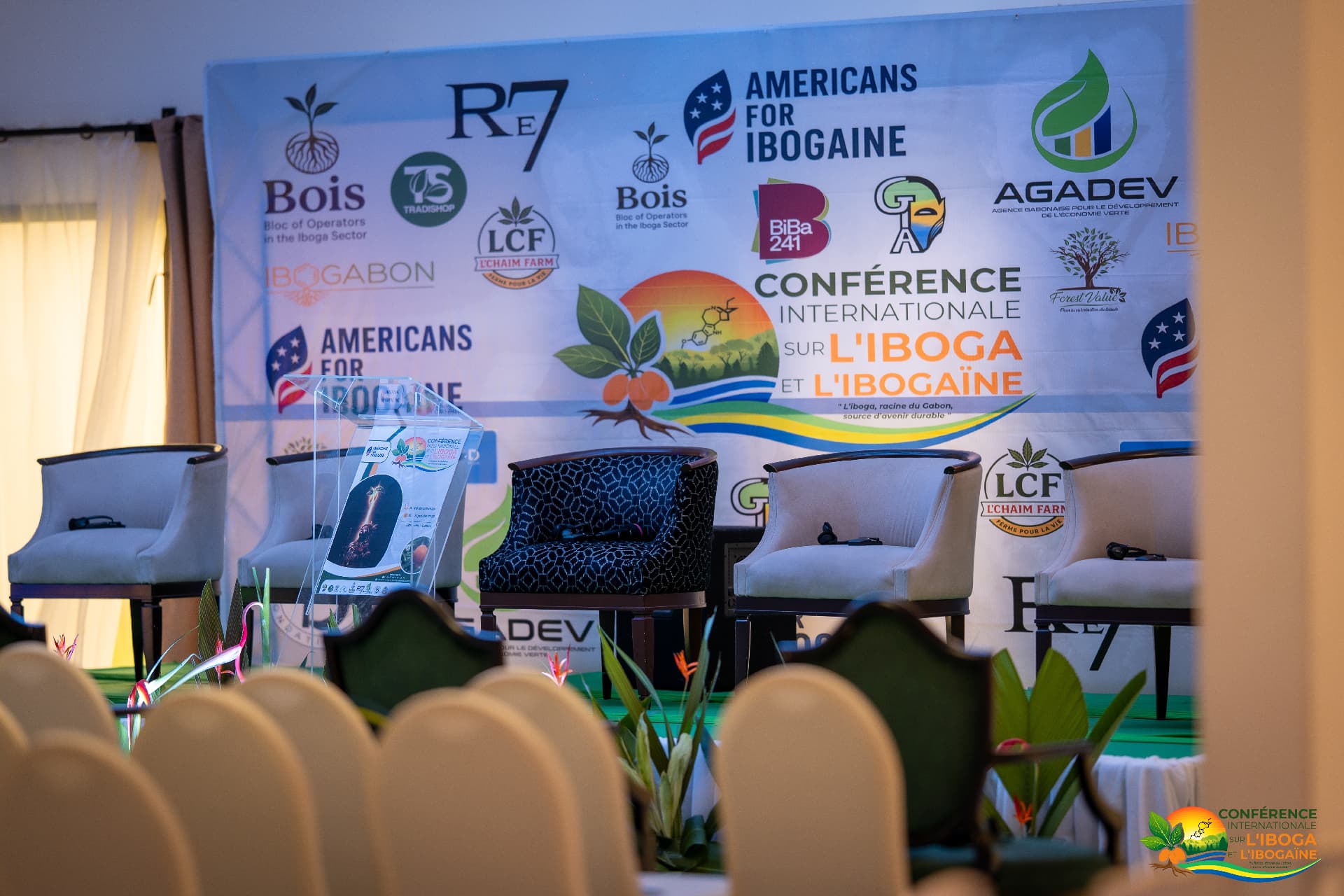
The Libreville Conference on Iboga & Ibogaine: Building the Future From the Source
In January 2026, stakeholders from Gabon and abroad gathered in Libreville around a central question: as international interest in iboga and ibogaine accelerates, how should this emerging field develop—and who should participate in shaping it?
January 20, 2026 · 7 min read
Read Article