
Responsible Sourcing · Manufacturing & CMC
Traceability Standards for Botanical Raw Materials
Why botanical materials need rigorous systems that preserve identity, origin, custody, and processing history.
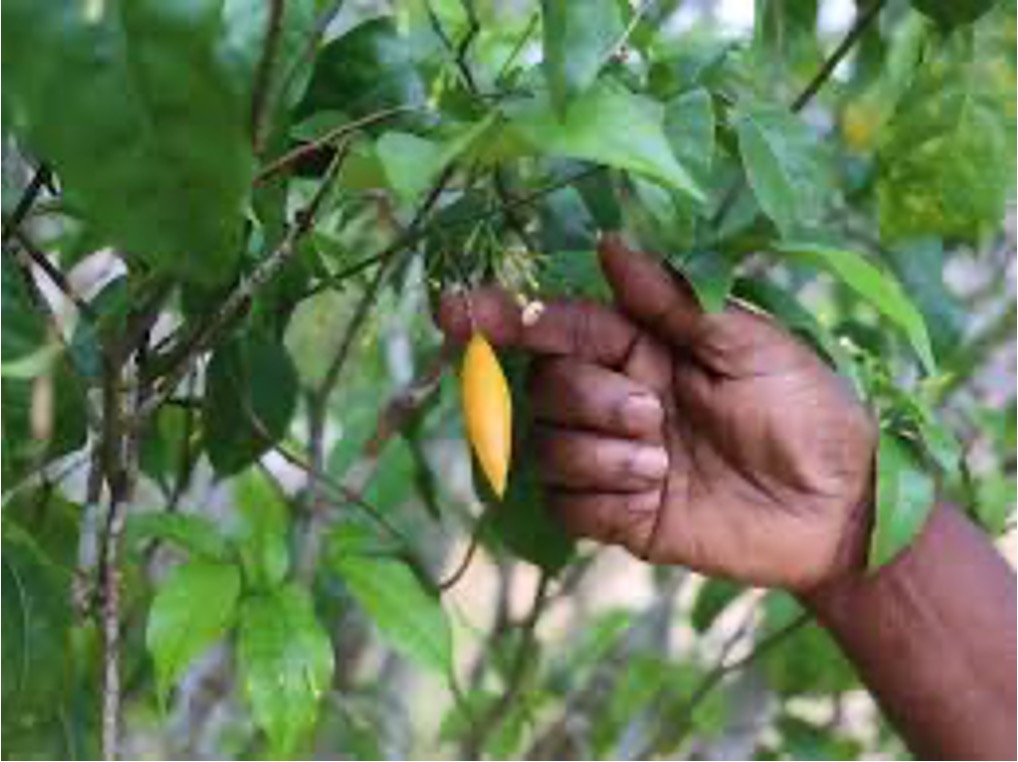
Botanical raw materials present a unique challenge for modern science.
Unlike synthetic compounds produced under tightly controlled conditions, plants emerge from biological systems. Their composition can vary with genetics, geography, soil, climate, harvest timing, storage, processing, and handling.
That variability does not make botanical materials unsuitable for rigorous scientific development.
It means the systems used to document them must be rigorous as well.
Traceability is one of those systems.
At its most basic, traceability answers a simple question:
Where did this material come from, and what happened to it before it reached its current form?
For botanical materials intended for research, manufacturing, or future regulated applications, the answer should be far more precise than a country of origin written on a label.
Traceability Begins at the Source
A credible traceability system begins before material enters a laboratory.
It begins with origin.
That can include information about where a botanical material was cultivated or collected, when it was harvested, how it was identified, how it was handled, and how it moved through the supply chain.
For some plant materials, traceability may also involve understanding whether harvesting practices were sustainable, whether the material was sourced lawfully, and whether collection occurred under appropriate local and national frameworks.
The point is not to generate paperwork for its own sake.
The point is to establish a reliable history for the material.
Without that history, downstream testing can tell us what is in a sample, but not necessarily how that sample came to exist.
Identity Is More Than a Name
Botanical materials are often described using common names.
That can create ambiguity.
Different species may share similar names. Related plants may be confused with one another. Materials may be mislabeled during harvesting, transport, storage, or trade.
Reliable traceability therefore needs to be connected to reliable identity.
Depending on the material and context, that may involve taxonomic documentation, visual or microscopic examination, chemical characterization, genetic methods, or a combination of approaches.
The more valuable or scientifically important a botanical material becomes, the more important identity verification becomes.
A supply chain cannot be considered traceable if the material moving through it is not confidently identified.
Every Batch Should Have a History
One of the core concepts in traceability is the batch.
A batch allows a defined quantity of material to be connected to a specific set of records.
Those records may include origin, harvest information, transportation history, processing steps, storage conditions, analytical testing, transfers of custody, and final use.
The result is effectively a biography of the material.
If an issue is discovered later—such as contamination, unexpected composition, degradation, or documentation inconsistency—the batch history provides a way to investigate what happened.
This becomes especially important as botanical materials move through multiple stages of processing.
Once raw plant material becomes an extract, concentrate, isolate, or formulated material, the chain of information should not disappear.
Traceability should follow the transformation.
Chain of Custody Matters
Knowing where a material originated is only one part of traceability.
It is also important to understand who handled it and when.
Chain-of-custody documentation creates continuity between stages of the supply chain.
That continuity helps answer questions such as:
- Who had possession of the material at a particular point?
- Was the material divided, combined, or transferred?
- Were storage conditions appropriate?
- Did processing create new lots or derivative materials?
- Can a downstream sample be linked back to its source batch?
These questions become increasingly important when materials are used in research or manufacturing.
A break in chain of custody can create uncertainty that analytical testing alone may not be able to resolve.
Traceability and Analytical Testing Should Work Together
Traceability describes the history of a material.
Analytical testing describes its measurable characteristics.
The strongest systems connect the two.
A batch record becomes more valuable when it can be linked to information such as identity testing, chemical composition, contaminant testing, stability data, or other relevant analytical results.
This connection creates a richer understanding of botanical variability.
Over time, it may allow researchers and producers to observe patterns between origin, cultivation, harvest conditions, processing methods, and chemical composition.
That can improve both science and quality.
Traceability is therefore not only a compliance function.
It can also become a source of knowledge.
Documentation Must Survive Transformation
Botanical supply chains rarely remain static.
Materials are dried.
Ground.
Extracted.
Separated.
Combined.
Purified.
Packaged.
Transferred.
Each transformation can create a new material while still depending on the history of what came before it.
A robust traceability standard should preserve those relationships.
If one batch of raw material contributes to several downstream products, that relationship should remain identifiable.
If several source batches are combined into one processed batch, that should also be documented.
This concept is sometimes described as maintaining material genealogy.
The goal is simple: no downstream material should become disconnected from its upstream history.
Digital Systems Can Strengthen Traceability
Paper records can support basic documentation, but complex supply chains benefit from structured digital systems.
Digital traceability can improve consistency, reduce transcription errors, create time-stamped records, connect test results to specific batches, and make information easier to retrieve when questions arise.
But technology alone does not create trustworthy traceability.
A sophisticated platform built on poor data is still a poor traceability system.
The quality of the underlying procedures matters more than the interface.
Good traceability depends on clear identifiers, consistent documentation, defined responsibilities, data integrity, and verification.
The software should support the system.
It should not substitute for one.
Traceability Is Also About Responsibility
For culturally and ecologically significant botanical resources, traceability has another dimension.
It can help support responsible sourcing.
Knowing where material came from may help determine whether it was sourced from an appropriate location, whether collection was authorized, whether ecological pressures are being monitored, and whether supply practices are consistent with stated ethical standards.
This becomes particularly important when global demand begins to rise faster than the biological resource can easily regenerate.
Without traceability, sustainability claims can become difficult to verify.
With stronger documentation, responsible sourcing can become more measurable.
Why Standards Matter
A traceability system is only as useful as the consistency of the information it contains.
That is why standards matter.
Common expectations around batch identification, origin documentation, custody records, processing history, testing, and data integrity can make materials easier to evaluate across organizations.
Standards can also improve communication.
Researchers, suppliers, manufacturers, regulators, and other stakeholders are better able to work together when they share a common understanding of what traceability should demonstrate.
That does not mean every botanical supply chain must use the same technology.
It means the underlying principles should be clear.
Building Trust Through Verifiable Information
Botanical industries often rely heavily on trust.
Trust in the supplier.
Trust in the label.
Trust in the stated origin.
Trust in the claim that a material was responsibly sourced.
Trust is important.
But strong scientific and commercial systems should not depend on trust alone.
They should create information that can be verified.
That is ultimately what traceability provides.
It turns a series of claims into a documented history.
The Future of Botanical Materials Will Require Better Traceability
As natural products become increasingly important to biotechnology, pharmaceutical research, wellness, and other industries, expectations around traceability are likely to increase.
The question will no longer be simply whether a botanical material is available.
The more important questions will be:
Where did it come from?
What exactly is it?
How was it handled?
What happened to it during processing?
What data supports its identity and quality?
And can those answers be independently verified?
For botanical raw materials, traceability should not be viewed as an administrative burden added at the end of the supply chain.
It should be built into the foundation.
At Reset Health, we believe credible botanical science begins with materials that can be understood not only chemically, but historically.
Because when the history of a material is clear, the science built on top of it becomes stronger.
This article reflects Reset Health's perspective on scientific and development considerations. It is provided for informational purposes only, does not constitute medical advice, and does not describe approved products, completed studies, or regulatory determinations. Development programs described are investigational and subject to scientific, legal, regulatory, and commercial uncertainty.
About Reset Health
Reset Health is a Gabon-rooted biotechnology company advancing plant-derived medicines through responsible sourcing, scientific characterization, and pharmaceutical development.
Related Insights

Building the Analytical Foundation for Iboga-Derived Materials
As interest in iboga grows, reliable characterization of complex botanical materials will be essential to reproducible science and responsible development.
June 18, 2026 · 5 min read
Read Article
Local Scientific Capacity as Infrastructure, Not Charity
Local scientific capacity is not a charitable addition. It is infrastructure that enables countries of origin to generate knowledge, build agency, and participate meaningfully in development.
May 2, 2026 · 8 min read
Read Article
The Libreville Conference on Iboga & Ibogaine: Building the Future From the Source
In January 2026, stakeholders from Gabon and abroad gathered in Libreville around a central question: as international interest in iboga and ibogaine accelerates, how should this emerging field develop—and who should participate in shaping it?
January 20, 2026 · 7 min read
Read Article